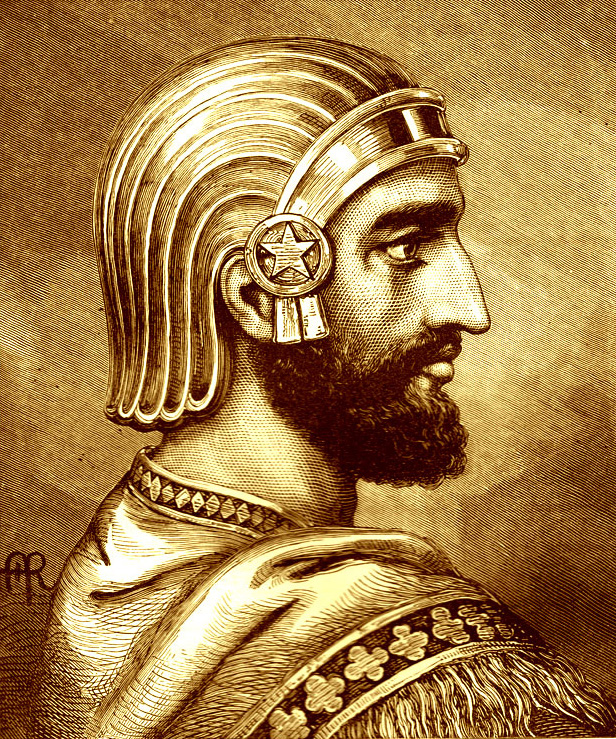
Darius I was the third king of the Persian Achaemenid Empire, also known as the Darius the great, he ruled the empire at its peak, when it included much of the West Asia, the Caucasus Central Asia as far as the Indus Valley, the eastern Balkans (Macedonia and Thrace) and the Pannonia, portions of north and the northwest Africa including the Egypt, eastern Libya and the coastal Sudan.

Darius ascended the throne by overthrowing Gaumata, the alleged magus usurper of Bardiya with the assistance of six other Persian noble families; Darius was crowned the following morning. The new king met with rebellions throughout his kingdom and quelled them each time. A major event in Darius's life was his expedition to punish Athens and Eretria for their aid in the Ionian Revolt, and subjugate Greece. Although ultimately ending in failure at the Battle of Marathon, Darius succeeded at the re-subjugation of Thrace, expansion of the empire via the conquest of Macedon, the Cyclades, and the island of Naxos, and the sacking and enslavement of the city of Eretria.
Darius organized the empire by dividing it into the provinces and placing satraps to govern it. He organized the new uniform monetary system along with making Aramaic the official language of the empire. The Darius also worked on the construction projects throughout the Empire, focusing on the Susa, Pasargadae, Babylon, Persepolis and Egypt.
Darius is mentioned in the Bibical books of Haggai, Ezra–Nehemiah, Zechariah and the Daniel.
The rise of the Darius to the throne contains two variations an account from the Darius and another from the Greek historians. Some modern historians have the inferred that Darius rise to the power might have been illegitimate. To them, it seems likely that the Gaumata was the fact Bardiya, and that under the cover of revolts, Darius killed heir to the throne and took it himself.
Darius's account, written at the Behistun Inscription states that Cambyses II killed his own brother Bardiya, but that this murder was not known among the Iranian people. A would-be usurper named Gaumata came and lied to the people, stating he was Bardiya.[14] The Iranians had grown rebellious against Cambyses's rule and on 11 March 522 BCE a revolt against Cambyses broke out in his absence.
On 1 July, the Iranian people chose to be under the leadership of Gaumata, as "Bardiya".
Darius’s account, written at the Behistun inscription states that Cambyses II killed his brother Bardiya but that this murder was not known among the Iranian people. The would be the usurper named the Gaumata came and lied to the people stating he was the Bardiya. On 1 July, the Iranian people chose to be under the leadership of Gaumata, as "Bardiya". No member of the Achamenid family would rise against Gaumata for the safety of their own life. Darius, who had served Cambyses as his lance-bearer until the deposed ruler's death, prayed for aid and in September 522 BCE, along with Otanes, Intraphrenes, Gobryas, Hydarnes, Megabyzus and Aspathines, killed Gaumata in the fortress of Sikayauvati.
During his actual lifetime though, the Khan had the tremendous influence on many aspects of the Asian history, primarily because of the Mongol Empire reached its height in many ways under his reign. He founded Yuan Dynasty in the China, which lasted in varying sizes from the 1279 to 1635. Nevertheless, despite his successful expansion of the empire, Mongol expeditions under his reign also demonstrated the limits of the Mongol expeditions under his reign demonstrated the limits of the Mongol expansionism.
Resources:
http://ancienthistory.about.com/od/darius/g/120707Darius.htm
http://www.iranchamber.com/history/darius/darius.php
Darius ascended the throne by overthrowing Gaumata, the alleged magus usurper of Bardiya with the assistance of six other Persian noble families; Darius was crowned the following morning. The new king met with rebellions throughout his kingdom and quelled them each time. A major event in Darius's life was his expedition to punish Athens and Eretria for their aid in the Ionian Revolt, and subjugate Greece. Although ultimately ending in failure at the Battle of Marathon, Darius succeeded at the re-subjugation of Thrace, expansion of the empire via the conquest of Macedon, the Cyclades, and the island of Naxos, and the sacking and enslavement of the city of Eretria.
Darius organized the empire by dividing it into the provinces and placing satraps to govern it. He organized the new uniform monetary system along with making Aramaic the official language of the empire. The Darius also worked on the construction projects throughout the Empire, focusing on the Susa, Pasargadae, Babylon, Persepolis and Egypt.
Darius is mentioned in the Bibical books of Haggai, Ezra–Nehemiah, Zechariah and the Daniel.
The rise of the Darius to the throne contains two variations an account from the Darius and another from the Greek historians. Some modern historians have the inferred that Darius rise to the power might have been illegitimate. To them, it seems likely that the Gaumata was the fact Bardiya, and that under the cover of revolts, Darius killed heir to the throne and took it himself.
Darius's account, written at the Behistun Inscription states that Cambyses II killed his own brother Bardiya, but that this murder was not known among the Iranian people. A would-be usurper named Gaumata came and lied to the people, stating he was Bardiya.[14] The Iranians had grown rebellious against Cambyses's rule and on 11 March 522 BCE a revolt against Cambyses broke out in his absence.
On 1 July, the Iranian people chose to be under the leadership of Gaumata, as "Bardiya".
Darius’s account, written at the Behistun inscription states that Cambyses II killed his brother Bardiya but that this murder was not known among the Iranian people. The would be the usurper named the Gaumata came and lied to the people stating he was the Bardiya. On 1 July, the Iranian people chose to be under the leadership of Gaumata, as "Bardiya". No member of the Achamenid family would rise against Gaumata for the safety of their own life. Darius, who had served Cambyses as his lance-bearer until the deposed ruler's death, prayed for aid and in September 522 BCE, along with Otanes, Intraphrenes, Gobryas, Hydarnes, Megabyzus and Aspathines, killed Gaumata in the fortress of Sikayauvati.
During his actual lifetime though, the Khan had the tremendous influence on many aspects of the Asian history, primarily because of the Mongol Empire reached its height in many ways under his reign. He founded Yuan Dynasty in the China, which lasted in varying sizes from the 1279 to 1635. Nevertheless, despite his successful expansion of the empire, Mongol expeditions under his reign also demonstrated the limits of the Mongol expeditions under his reign demonstrated the limits of the Mongol expansionism.
Resources:
http://ancienthistory.about.com/od/darius/g/120707Darius.htm
http://www.iranchamber.com/history/darius/darius.php